Showing posts with label Super Mario Bros.. Show all posts

Monday, November 4, 2013

Frostfall

Goddess On The Mountain by Liquidd-1

May 4: Born on the first breath of summer, the Dream-Child finds the Walking Way.

November 4: The crown is seized for the Empire of One, bringer of summer to winter.

May 4: The Woman-Goddess convenes the Summit on the Mountain and touches the Sky.

November 4:


Birth and Death and Order and Chaos are two sides of the Looking-Glass that intersect at the turning of the year. The In-Between days remind us that such things are universes apart brought together at the World Tree, the I. Dreamers of Godhood within the Dream of Godhead. We exist at the point between opposite extremes where opposite extremes exist together within themselves. The Mirror-Globe reflects images of ourselves and our own future-past. And so it all begins again.
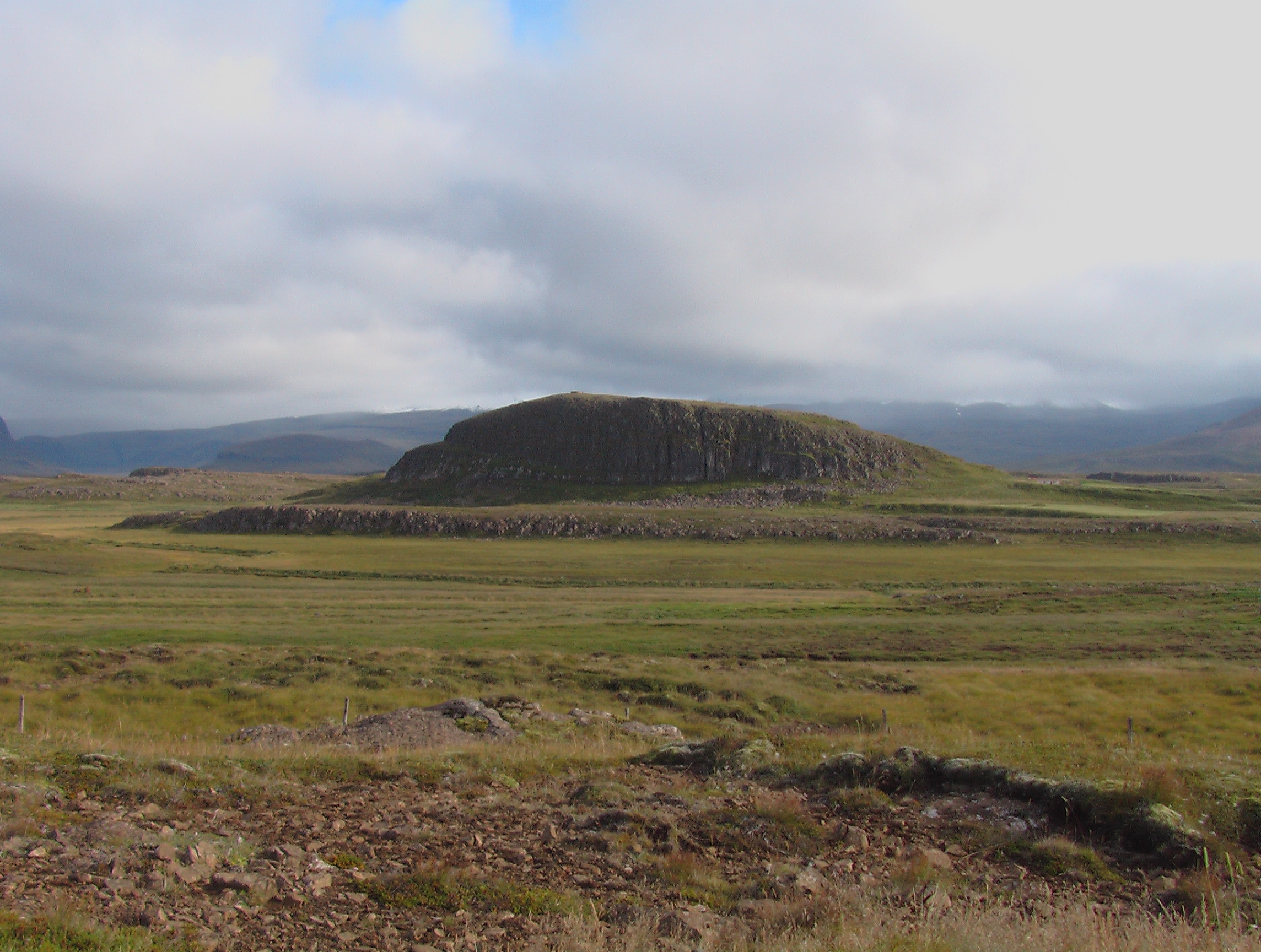
Helgafell. Myths tell us this is the burial mound of the Icelandic heroine Guðrún Ósvífrsdóttir. It is venerated as a sacred place of peace and enlightenment: It was the birthplace of the historian Ari Thorgilsson the Learned and once held a library of knowledge. It is also, perhaps because of its resemblance to a house with a door, seen as a gateway to other worlds.

What do we mean when we talk about Homeland? It's a question that has occupied my mind a lot this year. I was born and raised in Vermont and have spent my entire life here, but for the longest time I never considered myself a serious “Vermonter”, except by tautological default, largely because I guess I never knew what that really meant. Every place has a regional identity, and Vermont is no different, but “Vermonter” definitely means something special over here. It's just it took me awhile to figure out what that was, possibly because I've tended to be as isolated from my fellow Vermonters as much as I've been isolated from everyone else (not typically by choice, I hasten to add).

My parents moved here from Southwestern New York, bluntly, to hide. They wanted to be left alone and to be closer to the wilderness. Also though, I think they moved here because it reminded them of the United Kingdom and the British Isles, of which they're both enormous fans. There's a settlement on a mountain fifteen minutes away from me called New Ireland, and just beyond that is the stretch of land known as the Northshire, which is pretty much like what it sounds like it'd be like. They don't call this part of the United States New England just because it was the first place the pilgrims settled: There are parts of the Northeast US that would catch the eye of any Anglophile or visitor from across the pond. This all made sense to me. Until recently.

There are very few events I've lived through that I can decisively point to and say they conclusively changed my life. I can count them probably on half of one hand. Late 2010 into 2011 was a confluence of those events, including a chance meeting with a quirky and esoteric band of bloggers and Internet writers who would go on to become some of my closest friends and the first people I could comfortably and unhesitatingly call colleagues. But there are two important ones for the context of this piece: First was Vermont's behaviour in the 2010 midterm elections, in which a party of people advocating the state's secession from the United States and transformation into a anarcho-communist republic based around localist ideals blindsided everyone by walking away with a staggering 20% of the vote. They haven't made a lot of noise since, but our state has one of the most uniquely creative and progressive approaches to local politics you'll find anywhere in the US and is a natural breeding ground for that kind of thinking. This was the first time I realised how deathly serious we were about that. Vermont is one of the only places where the heart of the true and truly radical left still beats loudly in this country, and I suddenly realised I was a fit for this place.

But what actually is Vermont? I can't tell you objectively, as no-one can. But I'm sure my fellow Vermonters have a lot of strong opinions about it. I can, however, speak from my own personal experience. And I don't think Vermont is part of New England. I think it's something else. Whenever I spend time in Connecticut or Boston I don't really feel at home there. It doesn't feel like part of the same larger entity to me: It feels more like whenever I visit the Mid-Atlantic: It's close, both geographically and climatologically, and there's certainly a continuity, but it's not quite the same thing (no offense meant to my dear friends Phil and Maddy who do live in Connecticut and Boston, respectively: I'm sure they have just as complex feelings about where they live as I do). New Hampshire and Maine might be closer, but I still find them regionally distinct enough.

I'm not just talking about our quirky politics and local identity. There's an energy about this place I notice that I don't find everywhere. This year I read a wonderful book called Running with the Fairies which is an ethnography of the “Fairy Faith” in Ireland, which is in some ways an evolution of the earlier NordicXCelticXGermanic animism and folklore blended with bits of later Christian teachings. They use much the same language, saying that the Earth Magick, which they associate with the Fairies (who can be air or earth elementals) is stronger in some places than it is in others. The only other place I know I've felt a similar power or presence so far is, weirdly, Cape Cod, which is about as distinct from the rest of Massachusetts and New England as Vermont is...and almost as distinct from Vermont. Cape Cod is the place where the land disappears into sea and sky. The Outer Lands. It is, in the words of its greatest biographer, the Outermost, closer in kin to the Atlantic Ocean then to North America. It's also, funnily enough, probably the only other place in the US that has as staunchly radical, progressive and fiercely independent identity as we do. The exploits of Provincetown alone, at the very tip of the island, are legendary.

My parents always joke that I was born in the wrong part of the world. That I'm really a sea person who should move somewhere more tropical. It is true that I'm a surfer and subscribe to a lot of the beliefs and philosophies of the old surfers from Polynesia (not so much the commercialized glamour show of Southern California). I've had a fascination with that part of the world for years, and some of the first works that really captured my interest were nature documentaries about the ocean and movies like Disney's The Little Mermaid.
The Little Mermaid statue sits off the Langelinie boardwalk in Copenhagen, Denmark.


Cape Cod, thanks to its unique location, has really bizarre weather patterns. It's in the North Atlantic, but it attracts plant and animal species more commonly found in subtropical and tropical coastal environments, typically as it's a convenient pit-stop during the migrations that happen in the leadup to every winter and summer. Thanks to deforestation and the harshness of the ocean, the entire island is now covered in a twisted, gnarled, dried-out blanket of pine barrens, which just makes the whole place feel rawer and more elemental.

Cape Cod is home to the Woods Hole Oceanographic Institute, at one time the leading such institute in the world. Doctor Robert Ballard was based there, and launched his expedition to find the wreck of the RMS Titanic from Woods Hole. I wrote him a fan letter once.

Skálholt map, showing Norse conception of the Americas. The Vikings told of settlements in a region of North America called Vinland, or "meadow-land" where there was no snow in winter. Some scholars have placed the settlement Kjalarnes at Cape Cod.

The other event from 2010 and 2011 that changed the course of my life was the launch of The Elder Scrolls V: Skyrim. Skyrim is a serious contender for not just my favourite video game ever, but my favourite work of fiction period. But you should probably know that given the fact I can't seem to stop talking about it. I initially just picked up Skyrim simply to give the series one more shot: I'd played an Elder Scrolls game once before, The Elder Scrols IV: Oblivion, at the start of the seventh generation, but it failed to really grab me. I really liked the concept of an open-world action RPG where player choice and the freedom to explore, not just the sprawling world but your own individual experience of the world, was paramount. But the Cyrodiil of Oblivion did nothing for me: It was one big expanse of identical green fields that was the setting for what seemed to me to be a generic rip-off of J.R.R. Tolkien. I didn't know anything about what The Elder Scrolls' Tamriel really meant. Skyrim fixed that for me.

At the beginning of Skyrim, just as in the beginning of any RPG, you're asked to design a character. The Elder Scrolls gives you a choice of eight possible races and two genders: Knowing next to nothing about the background lore of the series I arbitraily made my character a female Nord, as I knew Skyrim took place in their homeland and the player was supposed to be hero of Nordic mythology. It made sense at the time. I gave her a name that was a variation on the name of the heroine of Jan Brett's book The Wild Christmas Reindeer, a story I remembered once enjoying about a spirited stablehand who herds Santa's reindeer. Brett has written many other books set in Scandinavia and the other real-world Nordic countries, and I always appreciate how her meticulous illustrations convey the worlds of the far North she seems to love so much so well.

Desktop wallpaper by Artfall, based on concept art for The Elder Scrolls V: Skyrim.

If you're as unfamillair with The Elder Scrolls as I was when I first started Skyrim you would be forgiven for thinking the Nords are simply a stand-in for the Vikings, in particular the generic barbarian Vikings so common to fantasy stories. Start to pay attention to the game a bit more though and you'll find that's not really the case: None of the races in Tamriel have direct real-world parallels. They all draw upon many different cultures, myth cycles and belief systems to create an identity that's at once unique to The Elder Scrolls and also very logical extrapolations and exaggerations of real world patterns of human migration. While the Nords do in many ways resemble Vikings, they're actually far closer to what we know of the pre-Christian, pre-Norse GermanicXCelticXNordic inhabitants of northern Europe and also seem based quite heavily on ancient Egyptians, the Stone Age Megalith builders and, especially in the case of the Skaal (an isolated group of Nords living on the far northern island of Solstheim between Skyrim and Morrowind), the animistic shaman beliefs of the idigenous peoples of the Americas, the Inuit, the First Nations of Canada and the Sami of the Nordic countries.

Very quickly my choice to play a Nord became a retroactive no-brainer. As I was gradually drawn more and more into the game's world I started to feel as connected to the land of Skyrim as its own people do. Skyrim, as a place, means a lot to me now, as much as any real-world “homeland” might. I am still religiously playing the game nearly two years after it was released and have, as of this writing, clocked a little under a thousand hours into just my PC copy. I probably know my way around Skyrim better than I do a lot of real places, and I hardly ever use the game's fast travel feature anymore. I know exactly where I'm going, and I love the land so much I need to experience as much of it as I can. But that's the thing about lands like Skyrim: They are real places: The Tamrielic monomyth tells us the world came into being by the intersection of the primordial forces of Order and Chaos, of Stasis and Change, in the Dreamtime. Chaos traumatically inspires Order to create, and Order creates by lucid dreaming of Creation. Skyrim, like everywhere in Tamriel, is a world built around ideas and dreams and given life by its people, who are all dreaming of it.


Skyrim, goodmorning by Jorian89. Skyrim the way we see it.

One thing the Nords share with many of their Elven counterparts (though they'd never admit it given the longstanding hostility between humans and Mer) is their fixation on what has been described as a process of mythogeneosophy: A Sacred Geneaology that traces their lineage back to the Dawn Times. The primary difference between them and their enemies the Altmer is that the Nords much prefer mutable oral history to staunch objective, obsessively curated records. A Master Narrative for a people who have a troubling tendency to fancy themselves a Master Race. The Nords, by contrast, turn to their history and myths as guidance for how to live their lives day to day, and minor things like “historical accuracy” (if such a thing can every really truly exist) are acceptable casualties if the alternative is giving up a good story that might could help shed new light and new perspectives on whatever current crisis they might be facing. We frequently turn to our heroes, idols, role models and the stories we heard as children in the hope they might help us come to terms with adulthood, and in the process we constantly re-interpret them.

Lewis Carroll always felt children (though really, girls) had a kind of perspective worth holding onto throughout life. Not the blissful naivete of children per se, but more the sense that the world is a grand and wondrous place and that some form of appreciation and acceptance of this makes us happier and healthier, a perspective shared by Shigeru Miyamoto. Maybe that's why we still turn to supposed children's literature like Carroll's Alice in Wonderland diptych, or Miyamoto's Super Mario games...and why works like those are frequently deeper and more meaningful than about 95% of the stuff targeted towards adults. Of course there's no way I could ignore the Once and Future Underqueen on her summoning-day: There's no way she would allow this, and the Dreamtime's Chessmaster checkmates again. As she always does. As she always will.


Alice by Antichristofer is a similar interpretation of the Underqueen and her realm to mine. To me, this version of Wonderland bears an uncanny resemblance to Morrowind. Using DeviantArt's "Browse More Like This" feature on this picture gave me fanart for The Elder Scrolls V: Skyrim.
A long time ago, perhaps as many as two decades, I once watched a nature documentary about a woman who lived alone deep within the Boreal Forest of Canada. She was fascinated by the lives of the local moose (known as Elk outside North America) and spent her days trying to join their community and painting gorgeously elabourate portraits of scenes of taiga life. I don't recall much about that special, though I remember the lady's name vividly: Gisèle Benoit. The idea of studying animals from a cultural perspective has always fascinated me. It dates back to the earliest forms of naturalism, back before, like all life sciences, it was subsumed by and folded into the monolithic engines of celular biology and neuroscience. From a zoology perspective this is often called ethology, although it's in many ways actually closer to ethnography and the Kratt Brothers (another team of modern-day naturalists who were big inspirations on my relationship with wildlife) call it “Creature Adventuring”. In fact, this is the primary reason I'm such a big fan of the Pokémon franchise, and what was going to be the philosophical underpinning of the multipart retrospective on that series that's supposed to be here. This was also the primary reason I abandoned the natural sciences to pursue anthropology instead. Years later, Donna Haraway, one of my biggest anthropological inspirations and one of my very favourite writers and thinkers wrote a book entitled When Species Meet, outlining the framework for a new philosophy she called “multispecies ethnography”.

I've always felt a kind of kinship with Canada as a whole, though I've never really been consciously aware of it until recently. I'm closer to Canada than I am to a lot of the United States, and in perhaps more than just a geographic sense. In the 1990s one of the only other television series I made a point to watch whenever I came on apart from Star Trek or Scooby-Doo was Acorn the Nature Nut, hosted by Alberta-based entomologist John Acorn. Like the Kratts and Gisèle Benoit, John Acorn was another naturalist on whom I based my conception of nature. Acorn was also known for his distinctive dry, understated tongue-in-cheek humour also shared by The Arrogant Worms, one of my favourite music acts, and that has been described as distinctly Canadian. I've sometimes been told I have a similar sense of humour. One of my favourite TV shows now is still Survivorman, hosted by Ontario native Les Stroud. What intrigues me the most about Survivorman isn't so much the survival techniques Stroud is ostensibly teaching us, but how intimate he seems to become with the land when he's alone in the wilderness for seven days. The show is as much about our connection to nature and our natural roots as much as it is about what to do if you crash your bike in the Canyonlands in the middle of winter (this is, incidentally, what's missing from not just every other survival show, but every other contemporary nature show period).


Athabasca River Valley, Alberta, as seen from the Geraldine Lakes. The Athabasca River is mentioned in the Arrogant Worms song "The Last Saskatchewan Pirate", and greatly reminds me of Skyrim's soaring mountains and winding valleys.
I don't know what possessed me to, randomly out of the blue, look up Gisèle Benoit online recently, and for what purposes. But I did, and I was curious to see if she had done anything else in the intervening twenty years or so. It turns out she has: She still lives in the Boreal Forest with only her parents and the animals for company, and has put out documentaries, paintings and art books hoping to chroncile the ebb and flow of life in the northern forests and to, in her words, “renew the sacred bond with nature”. One of her more recent masterpieces is a mammoth tome of an art book called Cascapédia, a comprehensive look at life in the titular region through her perspective. Although the book is now out of print, Benoit put the whole thing up on her website for free with annotations under the book's sketches and paintings, all of which bristle with her signature power and emotion. Cascapédia is just what I remembered Gisèle Benoit's work to be like, and, astonishingly (though perhaps predictably) I was taken aback at how much her artwork reminded me of Skyrim: Her renditions of Cascapédia are equally evocative of the atmosphere and energy I sense in Falkreath and Whiterun.

Cascapédia sous la neige, by Gisèle Benoit.

Every once in awhile I'll cross the border into New York with my family. This is largely because if we need to get any substantial shopping done, it's impossible to do that where we live. On the highway coming out of the border town of Bennington and leading towards Albany, there's a ridiculous tourist trap of a place called the Big Moose Deli just across the state line. It advertises itself as “the last stop in New York” and the place to go if you want to stock up on “Vermont Gifts” and souvenir kincknacks. And yes, there is in fact a gold-painted moose on the roof of the building. That and every kind of gaudy, tawdry eyesore you can think of piled up as far as the eye can see in the parking lot. Sadly, it's but one of many such institutions you find as soon as you enter the Mid-Atlantic (though it's probably the worst). Vermont is one of the only four states in the country where roadside billboards and advertising are expressly forbidden (the others being Alaska, Maine and Hawaii) and you don't need a “Welcome to New York” sign to let you know you've crossed over.

My family and I have debated on numerous occasions what precisely the purpose of the Big Moose Deli is. Do tourists think Vermont is one big empty expanse of forests and mountains and that the Big Moose Deli is the last bastion of civilization they'll bear witness to before boldly plumbing the heart of the wilderness? I mean, people do live here, and we can probably sell you better maple syrup, barbecue and handmade crafts. I suppose it is one of the highest profile places between the tri-city area and the ski resort communities if you don't ever leave the highway, and the Big Moose Deli enthusiastically sells itself as the “Gateway to Vermont”.

But that got me thinking that maybe Vermont is a kind of gateway itself: A Gateway to the North. Part of what makes us distinct is that our mountains are known as the Green Mountains, because they're heavily forested instead of rocky. But also I think it's because of our abundance of conifers when compared to the rest of the Northeast US. Climatologically speaking, Vermont is the gradient between two biomes: The mixed broadleaf forests characteristic of southern New England (excepting Cape Cod) and the taiga of Canada. The Boreal Forest. Ironic for a state famous for autumn leaf-watching tourism, the further north you go the more pines you see (and the fewer deciduous trees) and the more and more Vermont starts to look like a proper Northland. Vermont is the space between.
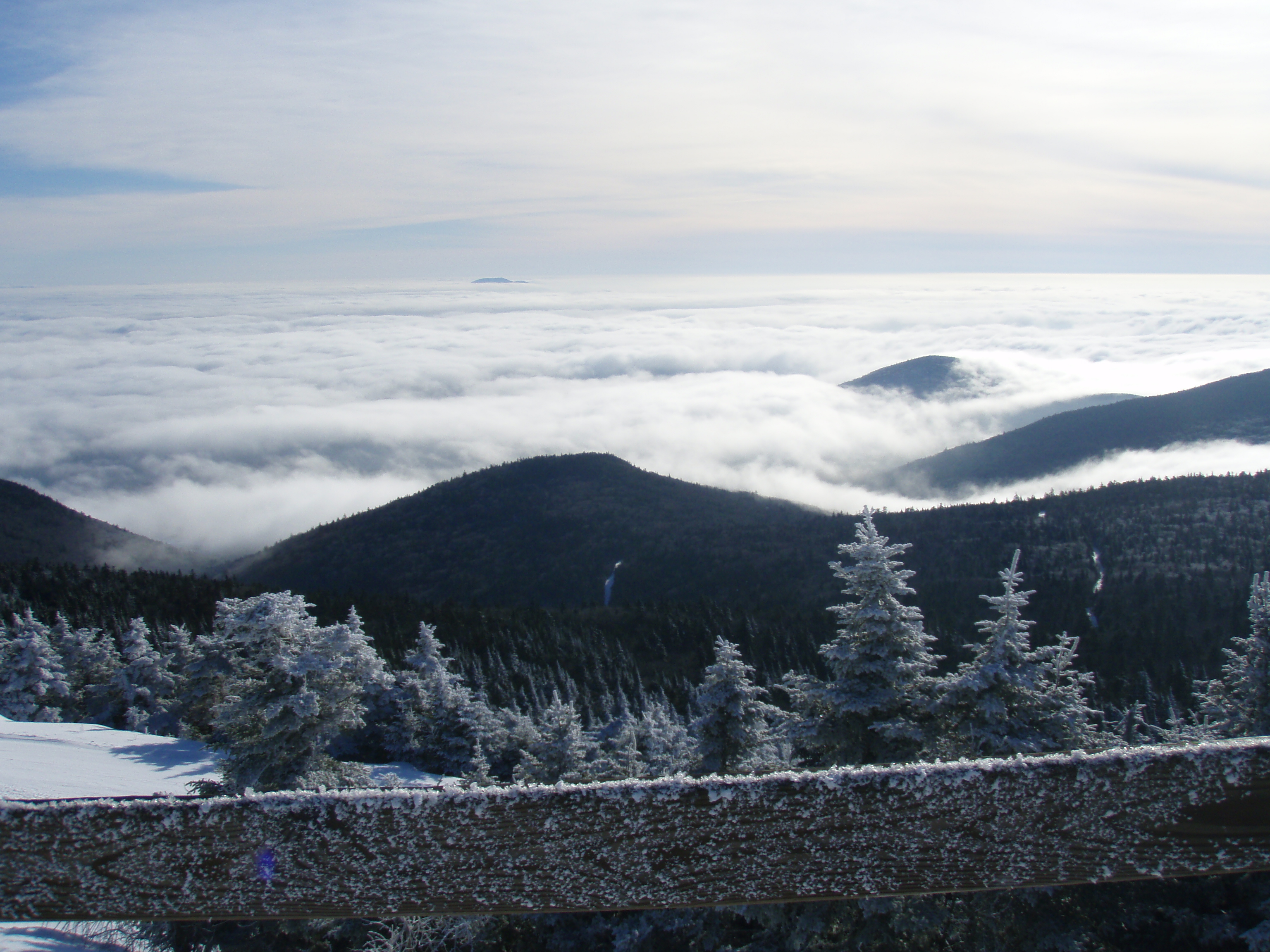

View from the summit of Killington Peak, home of Killington resort. Nicknamed "The Beast of the East", Killington is one of the largest and most challenging descents on the eastern seaboard. Nowadays, it also incorporates the resort at Pico, its neighbouring mountain. Pico is the oldest ski resort in Vermont, founded in 1937 by the Meads, a family of Norwegian immigrants. Daughter Andrea was an Olympic gold medalist. Pico can be seen in the distance.

The closest Canadian province to me is Québec, and I do now wonder how much being so nearby has shaped my positionality. I'm far enough north to feel closer to my neighbours in Canada than to my neighbours in New England or the Mid-Atlantic. In many ways I now consider myself a true Northerner. That said, I'm also far enough south to be disconnected from the sociopolitical machinations of the province, which, given Québec's staunchly and infamously nativist and racist history is probably a good thing. Québec is also where Gisèle Benoit's legal residence is, though the fact she spends most of her time distant and removed from human society in the forests of Cascapédia leads me to wonder how connected she feels to the strife and upheaval going on around her. We were all Wandering Ehlnofey in the Dreamtime. It was the Old Ehlnofey who turned to isolationism, but they did so out of insular, incestuous xenophobia, not a desire to become close to the land and the sky. It was the Wanderers who settled in Alt Mora, the Elder Wood, who learned how to do that.
Concept art for Elise Riggs from the 2012 reboot of SSX. Elise (played by Lucy Liu in SSX Tricky) is a Canadian snowboarder, surfer and base jumper. She's one of my biggest idols and role models. One of my favourite levels in the original SSX Tricky is called "Aloha Ice Jam" and is set on a glacier that's been towed from the arctic to Hawai'i.

In talking about the Alice in Wonderland diptych, Martin Gardner (who, in spite of the numerous problems he had in regard to his scholarship and motives in his other fields and careers, probably remains the foremost authority on Lewis Carroll) once mused on the irony of the mathematician and Reverand Charles Dodgson becoming most famous for his “pagan nonsense”. Gardner was most likely talking about how curious it was for the formative work of Victorian children's literature, and really all children's literature, to have nothing to do with Christianity, or really Westernism in general (indeed, its status as one-part venomously barbed social satire makes it rather the opposite of those things), but I'm going to take him literally. Alice is a pagan queen.

While Alice in Wonderland is very British, it's most evocative of the parts of British culture that predate the arrival of Westerners: All the references to the sídhe, (and to Elves in the working title) and to Otherworlds (including, debatably, Tír na nÓg) make this rather self-evident. It's also quite critical of the parts of Victorian Britain that come out of Westernism, most notably its attitude towards royalty: Gardner describes Carroll as a Tory royalist, but he's always seemed more ambivalent on this front to me and illustrator John Tenniel, a famous polticial cartoonist at the time, certainly seems less enamoured with the whole prospect. Either way, with or without Carroll's and Tenniel's positionalities, it's perfectly easy to afford the work this reading, and I'm not the first to do so.
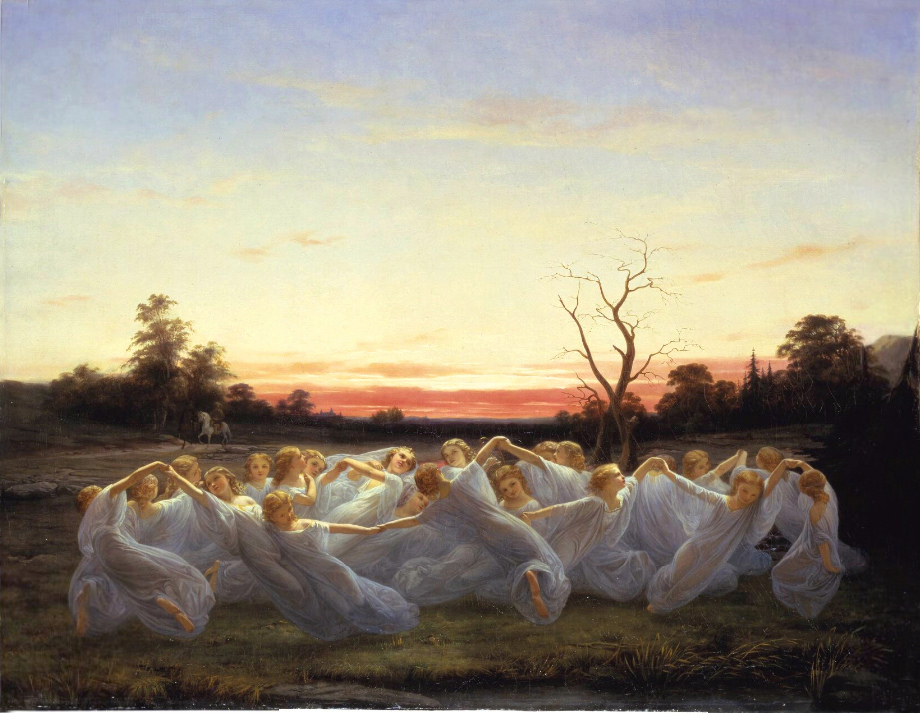
Meadow Elves, by Nils Blommér, depicts a gathering of Light Elves from Álfheimr, one of the nine worlds of Norse mythology. It is said Elves, like all spirits, would gather to dance on the hills during the festivals of Beltane, Midsummer and Samhain.


One of the things that's most impressed me about the history of the Tamrielic Nords is how logical and sensible it actually sounds. While, as I said, the Tamrielic races have no explicit real-world analogues its tough not to spot the influences in Nordic culture. They're Northerners, and it was through The Elder Scrolls I was finally able to come up with a theory about what that might mean. The Nords, the original Nords from Atmora, not the ones who absorbed too much influence from the Cyrodiilic empire and the Dragons they once revered, were mystical, animistic shamans for whom living as harmoniously with the land as was possible was a virtue of paramount importance, and they worshiped the sky as the domain of deified ancestors, and to understand all of this was to understand enlightenment. These are traits the Tamrielic Nords very overtly share with real-life Northerners: It's a cultural model shared by the Indigenous Americans, the Inuit, the Sami, and the real-life pre-Christian, pre-Norse Nordic peoples, and it decisively sets them apart from Westerners: These people are far more similar to each other than they are to those who originated from France, Italy, Spain and Greece. And its to them who I feel I might share a strong kinship with as well.

Fanart by Rafaken of the Throat of the World, the mountain serving as the symbolic and literal centre of the land of Skyrim. Also debatably the tallest peak in Tamriel. It is said the snow on the Throat of the World cannot melt, and dates back to the Dawn Times. The Nords believe humans were created when Kyne, wife of Shor, breathed life upon its peak. Nowadays, the renegade Dragon Paarthurnax, leader of the the Greybeards (a pacifist order of Nordic monks who devote their lives to worship of the Sky), meditates here on the concept of Voice, and how it can be used to touch divinity.

I suppose this would raise the question of how I reconcile my newfound Northerner heritage with my pre-existing magnetic attraction to the ocean, especially the tropical Pacific. In Norse mythology, Skaði, the Jötunn goddess of winter, skiing and the mountains was once married to Njörd, the god of the sea. While together, they split their time evenly between their two realms, with Skaði spending half the year with her husband in the ocean and Njörd spending the other half with his wife in the mountains. But neither was happy with this arrangement, and each would long for home while away from it, so they eventually divorced. But, strangely enough, I find the people the Northerners are most similar to may actually be the Polynesians.

In Donkey Kong Country 3: Dixie Kong's Double Trouble! and its sequel Donkey Kong Land III, Dixie Kong travels to the "Northern Kremisphere", a Northlands-inspired environment south of tropical Donkey Kong Island, eventually discovering the "Lost World", spoken of in myth and legend. The Northern Kremisphere, much like the Kongs' homeland, features tropical jungles intermixed with snow-capped mountains. The Donkey Kong Land series was one of my first real video game loves. Dixie Kong returns in 2014 in the WiiU sequel Donkey Kong Country: Tropical Freeze, by Retro Studios (known for Metroid Prime) and which features Vikings landing on Donkey Kong Island.


Both groups have similar attitudes towards oral history and both revere deified ancestors and elemental spirits. Most critically though, both placed great importance on the interconnectedness of worlds, in particular that of human life with the nature, as they are ultimately one and the same. Both also felt tied to their lands in a very deep and meaningful way-It's just the Poylnesians' “land” was in fact the Pacific Ocean. Indeed, both the Polynesians and the Norse Vikings were exquisite navigators (though the Polynesians were unquestionably superior): In fact, Te Rangi Hīroa's landmark ethnographic history of the Polynesians was titled Vikings of the Sunrise...and was cited by H.R. Ellis Davidson in her comparative analysis of the Celtic, Norse, German and Nordic peoples Myths and Symbols in Pagan Europe: Early Scandinavian and Celtic Religions.

Mauna Kea, as seen from the Ocean. The tallest peak in Hawai'i. Known as Mauna o Wākea, literally "The mountain of Wākea" in the Ancient Hawaiian, and seen as the land of the Gods, home of kind and helpful spirits, the seat of the sky deity Wākea and realm of Poliʻahu, goddess of snow.

I suppose I exist between extremes, or perhaps more accurately where extremes intersect. The Celts divided their year into a light half and a dark half, but it was the in-between times, when both light and dark comingle, that was the most sacred to them. I've never much cared for Fall. Actually, I loathe it. I much prefer Summer and Winter. Like the spirits, I celebrate midsummer and midwinter, but I'm most energized at Samhain and Beltane when summer and winter begin and end and coexist simultaneously. That's when I come alive.

Concept art for Tundraful, the second level of Alice: Madness Returns-American McGee's (of id Software fame) Gothic and surrealist re-interpretation of Alice in Wonderland.

May 4: The Dream-Child takes the Walking Way and learns to Dream.

November 4: The Dreamer Dreams anew, and henceforth Dream becomes Dreamer.

May 4: The Walking Ways lead us to the Mountain, upon which we may touch the sky.

November 4:


SummerXWinter. LightXDark. SeaXSky. These are the names of the Looking-Glass that we find at the turning of the year. The In-Between days remind us that such things are universes apart brought together at the World Tree, the I. Dreamers of Godhood within the Dream of Godhead. We exist at the point between opposite extremes where opposite extremes exist together within themselves. The Mirror-Globe reflects images of ourselves and our own future-past. And so it all begins again.

May 4: Taika, who is Ysmir Storm-Crown, returns as Adaleiz, born Adalhaidis of Atmora.


Snowgirl repainted, by Yoggurt.
 
“Tamriel never belonged to Bethesda. It was the other way around.

As for canon, it's really all interactive fiction, and that should mean something to everyone. That said, I appreciate and understand the stamp of 'official', but I think it will hurt more that it will help in the long run.

TES should be Open Source. It is for me.”

-Michael Kirkbride

Monday, February 11, 2013

Mythic Dimensions: Digital Technology and Performative Art


Recently, I went to go see Peter Jackson and Weda Digital's latest opus The Hobbit: An Unexpected Journey in theatres. I enjoyed it, which should say something given what it takes to actually drag me *to* a movie theatre, let alone appreciate whatever's onscreen. I'm not going to talk about the movie itself here though: I'm far from a Tolkien fan so I have precious little investment in the plot or characters. Basically I thought it was an entertaining, if clunky and painfully padded, children's fantasy movie frequently weighed down by its desire to canonize itself with the fundamentally tonally incongruous Lord of the Rings trilogy. In other words it's just about a perfect film adaptation of the book.

No, what I primarily wanted to talk about is the other big thing that's been fueling discussion over The Hobbit for the past few months: The fact it was shot entirely in 3D and a “High Frame Rate” 48 frames per second (HFR). This has apparently made a great deal of people very angry, leading critics whose opinions I would otherwise tend to respect to make stupidly sweeping statements about “The Death of Cinema”. I'll deal with this argument a little later on, but for the moment let's focus on why someone would even want to shoot a movie this way in the first place.

For those who might not know, traditional movies are filmed in 24 frames per second. This has been the industry standard for, well, just about as long as there's been an industry. Now, the human eye processes information about the world at 60 frames per second, which means movies, and really any medium that is descended in some way from cinema (such as television, though crucially not typically video games) plays at a significantly slower speed then what we're used to in Real Life. Choosing to shoot a movie at a higher frame rate means filmmakers can by definition convey much more, and much more nuanced, visual information than was previously possible, meaning their movies will look much more naturalistic. Indeed, in a video blog about the choice to shoot the Hobbit trilogy in 3D/HFR, Peter Jackson described the experience, in the words of a pre-release screening group, to be as if the screen at the back of the theatre had been removed and replaced with a window into Middle Earth.

Jackson's comment reminded me of some things Shigeru Miyamoto had said in the past about the Legend of Zelda series. According to Miyamoto, the original Zelda game on the NES was originally built around the idea of a fantasy world inside a desk drawer, which makes a lot of sense if you stop and think about it: Imagine opening up your drawers and looking down at Hyrule and all those tiny little sprites-It's a wonderfully imaginative and very typically Miyamoto way of phrasing ideas. The original Zelda even helped to popularize a top-down perspective for action RPGs. Coincidentally enough, a year prior to the release of The Hobbit: An Unexpected Journey, Nintendo released a handheld console built around the concept of portable, glasses-free 3D video games, and one of the first marquee titles on that system was a 3D conversion of The Legend of Zelda: Ocarina of Time.

In a previous post I've already argued for the use of stereoscopic 3D in video games in strictly technical terms. To briefly summarise my earlier argument, I feel stereoscopic 3D, via the reintroduction of naturalistic depth perception, can help bring back some of our innate ability to orient ourselves in our surroundings that polygonal games lost due to their lack of kinesthesia and fixed, flat perspectives. This would prevent things like the troublesome platforming in Mirror's Edge and the godawful camera in Super Mario 64 (or indeed any other polygonal platformer to come in its wake: Despite a generation of gamers becoming accustomed to it, the problem's never gone away). Here though, I'm arguing from strictly aesthetic ground, because if anything felt like a literal window into a fantasy world it was The Legend of Zelda: Ocarina of Time 3D running at full tilt with the 3D slider up all the way. 
 
Ocarina of Time 3D is one of the most visually stunning video games I've ever played and remains possibly the best showcase for the 3DS' kit to date. Hyrule has an unmistakeable depth and weight here, and running out onto the field at dawn as you shield your eyes from the realistic sun rays glinting above the horizon is a powerfully vivid experience that can be described as magical. Like so much about 3D, the beauty of The Legend of Zelda: Ocarina of Time 3D comes subtly and in small moments, like sunrise on Hyrule Field or using the built-in gyroscope to aim Link's bow, a trick which really gives the sense the game exists in an actual place that's just on the other side of the 3DS, or perhaps more accurately a place that exists *within* the 3DS. It lives up to Miyamoto's pitch for the series like absolutely no other game in the series has: It truly feels like you're holding the gateway to a fantastic realm in your hands.

Despite how vivid and clever this effect was and how it was clearly designed to hold up the original guiding tenant for the series, you know what *didn't* happen during my playthrough of The Legend of Zelda: Ocarina of Time 3D? I didn't trick myself into thinking I was Link trekking through Hyrule. I never forgot I was playing a video game. Likewise, when I saw The Hobbit: An Unexpected Journey in 3D/HFR I never forgot I was watching a movie. Apparently, if you listen to some critics, this is a major failing on the parts of both works and both Weda Digital and Grezzo should be absolutely ashamed of themselves. Indeed, this even seems to run contrary to Peter Jackson's own statements on the matter. Thing is, the way I see it both Jackson and the film critics are barking up entirely the wrong tree. Since the argument against 3D, and now HFR, is the most fully formed and bandied about the most in film critic circles, Jackson is most likely talking in marketing buzzwords and video game critics seem to mostly be parroting film critics (as opposed to gamers, who seem to be mostly being reactionary and opposed to any sort of change) it's the film critic version of the argument I'll focus on responding to.

Film critics seem to be having a bit of an identity crisis from where I stand. On the one, hand, there is, as always, a push and a desire for things to be as “realistic” as possible, hence the popularity of dark, anti-romantic and “cinematic” filmmaking techniques (see a similar trend in video games as publishers and developers race to improve graphics technology at all costs to make games look as much like movies as possible at the expense of everything else). On the other hand, there is a contingent of cinephiles who seriously argue that movies ought to be watched in a “dreamlike reverie” and only the combination of 35mm film and a 24 frames per second frame rate will achieve this. I guess we're supposed to be completely lost and overwhelmed by the rapturous cinematic spectacle of the director's vision...somehow...and anything else is nothing short of blasphemy. I've never experienced anything remotely resembling what these critics are proselytizing with any movie I've seen, but as someone who doesn't really enjoy movies all that much maybe I'm not the best person to be talking about this subject.

Even so though I find a lot of problems in this argument, especially as it relates to 3D/HFR. There is a belief that 3D is nothing more than a distraction and the enhanced detail of HFR makes everything look unnaturally fast and “hyper-real”. There is a legitimate technical argument to be made against the use of 3D in movies (see this article from the Chicago Sun Times), but this really isn't it and at least for me personally, 3D has done nothing but enhance my enjoyment of anything I've seen it used in in recent years. In regards to HFR though, rebutting this argument requires a great deal of technical explanation and knowledge about how eyes and the visual centre of the brain works. So it's a good thing Tested already did that then as I am neither an engineer nor a cognitive scientist (in brief, those bemoaning HFR's “hyper-realness” are frankly deluding themselves. Even the creator of Adobe Photoshop agrees with me).

As for the “dreamlike reverie” part of the argument, this actually gets at something that's a bit of a touchy subject for me. See, the flip side of this argument is that anything with an enhanced clarity of detail gets a negative reputation for looking “campy” and “theatrical” (say, a TV show), as opposed to being “cinematic” and “realistic” (like an old movie) which is, apparently, better. My good friend and colleague Phil Sandifer has already looked at this argument in the context of the switch from television being shot on film to television being shot on video tape here and here. When put this way then, the big film critic objection to 3D/HFR seems to actually be that the enhanced detail provided by the new digital technology breaks artifice and suspension of disbelief. In other words, it makes the movie look like a movie.

In The Hobbit: An Unexpected Journey, most critics I read yelled and screamed about how HFR made Rivendell look like a Matte painting (which it was), the interior shots look like movie sets (which they were) the lighting look unnaturally harsh (which all movie lights have to be due to the nature of being movie lights) and the prosthetics look like rubber and plastic headpieces (which I shouldn't have to explain). This is apparently a Bad Thing. It's also an argument I simply cannot get behind: The Hobbit doesn't look “hyper-real”, it looks just plain *real*. This is demonstrably and provably what a movie set looks like, period. Putting aside the troubling and I sincerely hope self-evidently false possibility that some film critics don't know what a movie set looks like, this leaves the argument that movies shouldn't look staged because of a need to be “realistic” or, alternatively, to uphold some lofty ideal about the Magic of Cinema. I've always been opposed to the idea fiction has to be representationalist at all costs. To be blunt I think the fixation on making things look “cinematic” and “realistic” has been one of the most dangerous and distasteful trends in visual media and it irks me more than a little to see things assigned objective value because based on how cleverly they hide the fact they're make believe.

Because this is the thing: Movies and video games, despite what most people seem to want to believe, are not real things. They are facades; storytellers playing pretend. They've never been anything else, and they will never be anything else. Trying to cast them otherwise does nothing except fool people into thinking filmmakers who are being stupidly crass and hegemonic are actually representing reality, thus continuing to perpetuate harmful stereotypes and lead to dangerous assumptions such as thinking the reactionary and truly reprehensible Lincoln is actually a historically accurate biopic or that romantic comedies are an accurate representation of the way relationships and people in general work. The Legend of Zelda: Ocarina of Time 3D and The Hobbit: An Unexpected Journey are not windows into Hyrule or Middle Earth and they were never going to be: They're windows into a crude technological facsimile of what Weda Digital and Grezzo *imagined* those fantasy worlds to be like. Fictional worlds do not exist in and of themselves: They are imaginary spaces made real by the interaction of readers, writers and the works meant to act as representations of them.

Possibly my favourite video game of all time is The Elder Scrolls V: Skyrim. As a series, The Elder Scrolls has the intriguingly paradoxical reputation of being a trailblazer in immersive world building and for pushing the limits of game technology to such an extent each and every game is plagued by an incalculable number of glitches and bugs that range from hilarious to game-breaking and are frequently both at once. One could make the argument Skyrim fails as a work of fiction because the constant technical problems take players out of the game and it's world and keep players from getting “lost” in the dreamlike reverie, but I would sternly disagree: Never once have the glitches in Skyrim caused me to enjoy the game less as a work. Sure, I get upset if it randomly crashes and deletes hours of progress or spontaneously decides to make my save file unusable forcing me to start the whole game again, but I accept that as part of what Skyrim is because it posits a fantasy world that could only exist as a video game. Inexplicably levitating mammoths and farmers falling through the ground are as much a part of the world of Skyrim as dragons, wizards and Blakean Eldritch Abomination Dwarves. Skyrim is a game that embraces being a video game and all that comes with it, and that includes the glitches Skyrim is a game world in every sense of the word, but that's a topic to which we must return at a later date.

I have no problem accepting the fact that my movies and games are actually made by people with technology and imagination instead of Real Places I can escape to that magically come into being out of nothingness. In fact I think that's marvelous, because it just helps me get to know the creators more *as people* rather then aloof Gods. I celebrate the death of artifice instead of bemoan it because, in its dying throws, it reminds us that art, and all art by definition, is performative. Fiction and art cannot represent reality; they can't even be a 100% accurate depiction of any individual creator's vision. At best, all they can do is provide a brief, blurry glimpse into the minds of those who helped usher it into being or strike a chord with individual readersXplayersXaudience members to form an entirely unique kind of meaning.

In a famous and frequently circulated interview (well, comparatively so given the participants) philosopher Avital Ronell, a personal role model of mine, though she'd probably resent that label, flatly rejects the title of “Writer” or “Creator”, preferring instead to call herself a “writing being” or “secretary of the phantom”. For Ronell, writing is not something one, in the manner of a patriarchal God, makes happen and wills into existence. Rather, it can be more accurately described as the act of taking dictation from an incomprehensible ethereal force and trying one's hardest to throw up a facsimile that in some way could be construed as a crude representation or simulacrum of the original set of ideas. One does not “Write”, one is possessed and consumed by “writing”. Ronell compares those who write to drug addicts: Figures imbued with a manner of unreliability and social stigma who nonetheless have a grasp over a unique perspective and insight.

I love this description for a number of reasons: Firstly, as someone who identifies as a similar “writing being”, I can honestly and confidently state this is exactly what writing feels like for at least me personally. Secondly, it's a great argument for the inherent performativity of all forms of personal expression. Indeed, interviewer D. Diane Davis even uses that exact term when referring to Ronell's breakout work The Telephone Book, a piece designed to invoke static noise, contradictory information and the deconstruction and destruction of the book itself as a concept. A play doesn't represent reality and doesn't even try to: Its actors and stage sets are meant to *stand in* for things and situations the audience is familiar with and the real erudition comes from the interaction of all the pieces working together to create a larger, weirder whole. Just as Ronell says, any kind of creative endeavor, be it a book, a movie, a literary text, a journalistic piece, an ethnography, a video game or a blog post, works the same way, no matter how much certain people might wish to pretend otherwise. Personally, I find that a far more fascinating and inspiring concept then the idea our works of art and fiction spring magically fully-formed in the manner of Athena from the skulls of patriarchal Godlike Creators whose Works and Actions must be respected and worshiped in the same manner.

I think of all forms of modern media video games have the biggest potential to emphasize and reinforce this fact, which is part of the reason I'm bothered so much by the language from certain developers and critics that games need to be more “cinematic”. Due to the irreducible factor of player agency, by definition there's no way a video game can force a passive narrative or specific experience onto its audience, despite the efforts of some developers to do exactly that (but that's perhaps another post). Games are fundamentally set up as dynamic interactions between multiple parties at a very overt, literal level, so this performative thread shines through the brightest with them. For a good example of how developers can write this back into the text, let's look at one of the best spokesperson characters for games-as-plays around: Princess Peach Toadstool. Yes, it's once again time to do one of my signature hyper-redemptive readings of a character or text either nobody likes or has nobody has ever heard of.

But how, my indignant readers wail, do I think I can redeem Princess Peach of all gaming characters, the poster child for sexist, stock damsels-in-distress? Well, I respond, it's actually quite simple once you realise what the Super Mario games actually are. The common perception of the Mario games, most famously and succinctly articulated by Yahtzee Croshaw in articles such as this one, is that despite the original Super Mario Bros. (or Super Mario Bros. 3 depending on your preference) being an indisputable classic, it's a tepid and unchanging series that has somehow managed to last over 25 years telling the same basic story and rehashing the same basic game over and over again with absolutely no variation. Also, Peach is reprehensible because all she does is look pretty and get stupidly kidnapped, serves no purpose and lacks any personality or characterization, which would be a valid complaint were any of it actually true. The Mario series' lack of so-called gameplay innovation is one thing and an argument to be examined another day (and one I think might have merit, at least as it pertains to the games of the past decade or so), but Yahtzee's dead wrong when it comes to plot and here's why.

First of all, I'd mention that despite my universal disdain for any kind of kidnapping plot, King Bowser actually had a somewhat acceptable motivation for kidnapping Princess Peach in the first Super Mario Bros. and one most modern critics seem to have forgotten. See, what no-one remembers anymore is that in the story printed in the original manual, it's stated Princess Peach is an extremely powerful sorceress, possibly the most powerful in the entirety of the Mushroom Kingdom, and the *only* one with the power necessary to push back the Koopa invasion force and secure the land. Naturally, Bowser wants to seal her away where she can't do any damage so he can stomp over the Mushroom Kingdom uninhibited. Frankly, Peach is the one who saves the world in that game: You, Mario and Luigi, are just there to give her a hand and clear a path for her. Even if the plot of Super Mario Bros. made sense though, that doesn't explain or excuse all of Bowser's subsequent kidnappings of her, does it? Well, no it *wouldn't*, if he had done it again, as I'm inclined to argue Bowser never kidnapped Peach a second time, and even the first time is debatable.

Shigeru Miyamoto is not a hack writer. I mean I really don't think I should have to state this, but a lot of critical readings of Nintendo games seem to operate with this as an implicit fundamental premise for some reason. Even in the more recent games where he has little-to-no creative input, he still has to sign off on the game and let the developers know they're being somewhat loyal to his original vision. They have to be meeting his expectations to some extent, and unless he's a terrible writer there must be something more going on here. And indeed there is: Look *very* closely at the Super Mario games that came after the original, starting with the US version of Super Mario Bros 2 (A.K.A. Super Mario USA), the next game Miyamoto had a major hand in. The story is, as is well known, meant to be a dream, but the game opens up with a *curtain call* and you select your character by *shining a spotlight* on them. Super Mario Bros. 3 takes this to the logical extreme by not only having the title screen be a big stage with a curtain and props, but the level design itself looks like it's been built by stage hands, as there are conspicuous amounts of bolted-on scenery and scaffolding and Mario and Luigi even “exit, stage right” whenever the level ends. The Super Nintendo games Super Mario WorldXSuper Mario Bros. 4 and Yoshi's Island take a slightly different tack by opening with fairy-tale narration, but the main point is still there: These games are stories being retold via the act of playing them.

Not a spotlight. I think it happens in the SNES version. Still, picture is worth 4.532 words.

\
I think it should be obvious what the logical conclusion to all this is: The Super Mario games are plays, and Mario, Luigi, Bowser and yes, Peach, are part of a travelling acting troupe. Peach just happens to be comparatively badly typecast, or maybe it's an attempt to retell the same story many times with subtle variations as a kind of metaphor. This isn't, I hasten to add, solely my interpretation: It's a fan theory gaining significant momentum online (to the point even Cracked mentioned it) and has even been confirmed in a statement from Miyamoto-san himself. This also handily explains the various Mario spinoff games and why Mario and Bowser play tennis and go kart racing together when they're not at opposite ends of a plan for world domination (incidentally, this revelation, paired with the working-class origins of the characters, leads to the intriguing conclusion Miyamoto is likening Mario's acting troupe to William Shakespeare's. Do with that what you will). This reading does seem to hold: If we look at just about any Mario game made since the original five or so, we see that curtains, stages and retelling stories have become fundamental parts of the series, not to mention the infamous fact it's difficult to read the Mario and Donkey Kong from the original Donkey Kong as being the same characters from Super Mario Bros., Donkey Kong Country and their successors. Obviously they're not: They were playing different roles in a different play at that point.

To return to the main thrust of this post, which was how high-end digital technology like 3D and HFR enhances performativity in media, let's look at the most recent Mario game as of this writing (or at the least the most recent one I've played): Paper Mario: Sticker Star on the 3DS. The case for HFR is fairly straightforward and self-demonstrating in my opinion, something I feel I've sufficiently justified and not as relevant to video games, so we'll talk about 3D here. The Paper Mario spinoff series has always driven home the theatrical production reading harder than other Mario series, and this new game is no exception and clearly delights in having stereoscopic 3D to play with. Mario can move in, on and around various bits of scenery, which can be knocked over, picked up again and rearranged to suit different gameplay needs. Everything looks to be made out of cardboard and a key aspect of the game is remembering that the levels are literally cut-out facades in a three-dimensional world, and the game forces players to keep checking things from all angles to find everything. It feels as if Mario's in a play and improvising on the fly when props and sets don't always do what they're supposed to. While the game's major point could probably be conveyed without it, clearly it's relying on stereoscopic 3D to get it across particularly vividly.

Another 3DS game I've been playing recently, Atlus' Code of Princess, uses a similar approach. It's a cross between an arcade beat-em-up and a JRPG that's wholly aware of the inherent ludicrousness of both genres. The characters are all delightfully self-aware parodies, and even more laudably mostly female, but the most interesting aspect of it from our perspective is the way the battle stages work (and as an aside, note the ubiquity of the term “stage” to describe video game levels). Like in most beat-em-ups, Code of Princess uses a static camera angle that slowly follows the character as she fights her way from left to right. The main innovation here, aside from the aforementioned RPG experience system and genre awareness, is the fact there are three main battlefields on the screen at once, and the characters can leap into the background and foreground at various degrees, which is where the stereoscopic 3D comes in. It's not as overtly theatrical as a Mario game, but the world of Code of Princess definitely feels much more like a stage set thanks to this sort of gameplay (in addition to the general look-and-feel of the game on the whole) than a fully developed fantasy land, and that's to the game's benefit.

Just like a play, these games work by recognising they're inherently performative and gain a lot of their strengths as works by playing off of the audience. Each playthrough of a video game is different, even before you factor in the different styles and tastes of individual players, just as no two performances of the same play, even if it's put on by the same troupe, will be identical. This is abundantly clear here, as it is in all video games, but I maintain a thread of performativity runs through all creative works: We wouldn't have differing interpretations of things if it didn't. So why pretend it isn't there? Why pretend movies, music books or your medium of choice exist in a vacuum separate from human emotion and thought? That's the perhaps uncomfortable truth things like 3D and HFR force media critics to come to terms with. Far from getting us closer to some mythical Truth, all these new technologies will do is remind us of the multiplicity of meaning, and I for one couldn't be happier.  

O Objectivity our subjugator, your legend is lies, lurid and false; your dreamlike reverie a con for the ages.

Wednesday, July 4, 2012

“Dear lost companions of my tuneful art”: Gamer Culture and A Life on Video (Part II-At Home and Abroad)

WYSIWYG
One of the ways Nintendo was able to rebuild the viability of home video games after Atari imploded and took the whole industry with it in 1983 was to reconceptualize video games as children's toys. It may seem strange to look back from our vantage point and observe how bizarre and radical a shift this was, but it was a very deliberate and tangible change in direction with repercussions. Nintendo had been expressly warned that launching a new game console in the wake of Atari guaranteed them failure as Atari's collapse had tainted the entire industry. Therefore, Nintendo consciously marketed the NES in the US as a hot new toy for kids in an attempt to avoid comparisons with the failed Atari 2600 and other personal computers that were starting to dominate the consumer electronics market. Afterward, and once it was a reasonable assumption that the majority of youngsters had access to an NES, it became very easy to take this fact and build a huge merchandising empire out of it. There was Nintendo breakfast cereal, Nintendo bedsheets, Nintendo clothes, Nintendo action figures, Nintendo stuffed animals, Nintendo sports equipment (*yes*) and even Nintendo Saturday Morning Cartoon shows (they were all crap, in case you're wondering, but this really isn't the place to talk about Saturday Morning Cartoon shows in any detail). But that's far from all that was going on with NOA and the NES: the clever idea they had was this. Once all the parents bought their kids Nintendo consoles and games for the Holidays, they'd be able to subtly start showing off the machine's true potential and capabilities. It worked, and worked amazingly well.

The conflation of games with toys that really started with the NES may be where some of the stigma gamers claim to experience originated from, as it could be said they never “outgrew” their “toys”, but it's telling no similar strategy was used in Japan, where the thing was simply dubbed the Family Computer and even had a floppy disk drive and a planned rudimentary Internet-like system. It's also crucial to note that Shigeru Miyamoto's early arcade games, Donkey Kong and Mario Bros. were expressly not designed to be solely kids' fare, meant to to be played as they were in bars. But of course we know better: NOA's little scheme to sneak the NES into households under the radar was absolute genius, and it was a common occurrence in many homes for parents to put their kids to bed after an evening of watching them play Mario and then, after the kids were asleep, to creep back downstairs and spend the rest of the night playing Nintendo themselves. Many grandparents were enthralled by the new games too and would discuss them just as earnestly and fervently with each other as their grandchildren did.

This was of course Nintendo's goal from the start: To make games anyone could enjoy, appreciate and share. This is an intellectual tradition of theirs that dates back to Donkey Kong, the Game and Watch series and their skeet shooting ranges. I surely need not remind my readers their first console was called the Family Computer. This is why I'm so continually baffled by people who bemoan the Wii and it's abandoning of the “hardcore” to court the “casual, social crowd”. As if Nintendo had ever catered exclusively to the “hardcore gamers” (a term of self-definition I personally find incredibly intellectually and historiographically lacking). Nintendo's games have always been for anyone who possessed a child's unconditional love of life, no matter what the biological or calendar age. No-one is entitled to a monopoly on them.

In any case, given the Nintendo saturation that was prevalent in the late '80s and early '90s, and even after Nintendo of America made a concerted effort to make video games synonymous with kids' stuff, which the medium absolutely had never been before 1985 or so, I can say from my experience at least that neither myself nor anyone I knew was ever persecuted or bullied for liking video games. It was just something kids did: You talked about Nintendo on the playground, went home, ran around outside for a bit, played some video games and watched TV. If it was the summer, you'd split your time between traipsing around forests building forts and playing kick-the-can and eating lunch with the Nintendo. To be perfectly honest and fair I was homeschooled for a lot of my childhood so the interaction with friends and the use of the playground as a social centre was a bit limited for me personally a lot of the time, though I did witness it and have comparable experiences with the friends I did make and members of my own family. In a previous post I've already recounted my memory of playing Super Mario Bros. at my cousins' house: Playing video games together with them was a regular occurrence, either at our place or theirs and was usually done after coming in from having adventures outdoors for the day and before dinner (and after at times as well) and those evenings spent playing local multiplayer on the NES or passing a Game Boy back-and-forth with my cousins are some of my most treasured.

As I got older and travelled elsewhere, home video game consoles continued to be a source of social bonding for me. For a time in my teenage years I attended a school where Olympic-bound athletes would take their lessons during their training period. The campus during that time was a weird confluence of extremely determined professional athletes, serious academic-minded scholars, artists and conservationists. It was an utterly unique and valuable experience and I even got to train with the local snowboard team for a bit while I was there. Video games were a big part of my social life there too, as me and the rest of the trainees would often hang out in the lounge after school taking turns on the communal NES and various SEGA consoles (there really were quite a lot of those, weren't there? And all out at the same time too). One of the at once coolest and strangest things I remember happening was hanging around the lounge alone after hours one evening playing Super Mario Bros. and having my science teacher, a charming young lady fresh out of college who split her time between teaching at the school and working as a tour guide and ecologist on the summit of the tallest mountain in the state, walk in and, seeing what I was playing, excitedly sit down next to me and jump into the game with me. She even taught me some of her signature tricks to navigate the underground levels-it was awesome.

Every new place I go games have traditionally been a kind of glue that held my various social connections together. From joining my whole dorm in an impromptu Halo: Combat Evolved tournament on the lounge XBOX, throwing LAN parties with my suite-mates over a local network we Gerry-rigged together for us and us alone to late-night Super Smash Bros. jam sessions with the guys from the common house, video games have continued to frequently go along with some of the best memories I've shared with my friends and family. And, just as always, everybody played: Girls, boys, athletes, alpine tundra ecologists, creative writing students, artists, frat guys, humanities scholars and astronomers. There was never anything strange or unusual about that: Video games were a universally shared cultural experience, just like any other kind of media, hobby or activity. I'd never thought of them otherwise.

Because of this, I've been presented with quite a few large and confounding philosophical problems these last few years. Things like “When did video games ever fall out of the 'mainstream'?”, “Where did the self professed gamers come from, why are they apparently so horribly persecuted?” “Why does playing video games constitute a subcultural lifestyle any more than watching movies, reading books or listening to music does?” and perhaps most annoyingly “Where are all these big mean jocks who are supposed to bully me for playing video games? I mean, I went to a jock school forchrissakes: If anything qualifies for that label it's a school for Olympic athletes in training. The only jocks I knew were the ones playing Nintendo with me in the lounge. Does that make me a big mean jock too? Do gamers just watch too many John Hughes movies?”.

In spite of the attitude my above glibness might imply, I'm not intending any of this to belittle anyone's personal experiences with video games as a medium or in anyway claim their positionality is imagined or fallacious or that mine is more valid. What I am saying is that my positionality is radically different from theirs, to the point of complete incongruity, and I don't understand why. There certainly does seem to have been a shift in the way video games were generally perceived and a clear-cut turn to a presumption that the medium has always been underground and fighting for legitimacy, I'm just not sure when and why that happened or where it came from. I certainly remember some half-baked moral panics in the mid-1990s to early 2000s over games like Mortal Kombat, Grand Theft Auto III and some of id Software's early games and that some especially obnoxious politicians were complaining games were corrupting the youth, but I honestly remember that never being something anybody really took too seriously (the Columbine school shooting aside, of course, but even that seemed to resolve itself rather quickly) and the sort of thing that happened to all young media, like rock music and witchcraft. There is of course the omnipresent existential nightmare of how video games handle narrative and how they compare to other forms of media in terms of artistic expression and value (goodness knows I've written enough on that already and I'm far from through yet), but that's a problem of self-reflection the industry brought on itself, not had imposed on it from the outside.

I'm also not saying bullying and bigotry isn't a problem for far too many people: In fact, the older I get the more convinced I am it's the defining aspect of Western society. I was picked on as a kid too, though not nearly to the same extent as others and nowhere near as much as I would have had I not been an extremely private person, and only so far as the fact my elementary school was full of egomaniacal bastards who were horrible to everybody. In other words, of all the things I was made fun of for growing up, playing video games was not one of them. And while I never experienced any video game-driven harassment as a kid, or at any other age for that matter, this does segue nicely into my final point which is, if video games had never been a harsh, exclusive, unwelcoming environment in the past, they bloody well are NOW and most of the vitriol is coming from within the so-called “gamer” community and is being perpetuated by the industry itself.

While I of course am going to avoid generalizations and stereotypes and know full well not all self-professed gamers are angry, bigoted people there's no way to put a fine point on this: The games industry as it stands today is a damn scary place as far as I'm concerned and honestly makes me ashamed to be involved with it at times. The treatment of women is particularly unforgivable: Just this past year we've had competitors at a Capcom-sponsored Street Fighter tournament sexually harass a female player to the point she was forced to drop out, a sizable army of cyberbullies send incalculable amounts of appalling hate speech and threats of violence to a female producer attempting a startup campaign for a Web TV show about Male Gaze in video games and not one but TWO high profile games journalists getting fired for verbally abusing female personalities over the Internet in clearly sexualized ways. I'd go into these cases more and scores others to boot, but I'll instead link to this article which summarises them all nicely.

It's not just from the gamers: Our industry thrives on sexualized violence, and why not if that's what its consumers want? I briefly mentioned the male domination subtext in the blockbuster hit Batman: Arkham City in the past and the questionable gender politics inherent in franchises like Call of Duty and Gears of War should hopefully require no elucidation. This year we even got a lovely trailer for the new Hitman game, Absolution, which took great pains to show protagonist Agent 42 brutally slaughtering a group of supermodel female assassins dressed in fetish nun gear. However, for my money there's no better example than the games proudly showed off to legions of jubilant games journalists at E3 2012. The Far Cry 3 demo began with a minigame where the player gets to grope a submissive female NPC's blocky breasts and proceeds into a horrific bloodbath of explicit and brutal violence. Assassin’s Creed 3, the latest entry in a franchise already about creative ways to murder people, clearly revels in the new elegant ways to dispatch the many representations of living things contained within. New entries in the Splinter Cell and Tomb Raider series were no different, the latter even being an exciting reboot where pioneering video game leading lady Lara Croft gets a new violent and depraved backstory and gets threatened with rape at numerous points in the game to make her feel more “vulnerable” and “realistic” so players would want to “protect” her. Hell, even Watch Dogs, arguably the most interesting reveal at the show, has one or two fairly disturbing moments.

I'm not one to defend censorship or claim violence has no place in fiction, but there's a difference in the way the violence was treated here. If you must use overly violent content in your work, it ought to have a purpose, usually to show off how serious and disturbing the setting has become. None of these games do any of that, and it seems more and more like gamers don't care. This violence is sexualized and celebrated in a way that alarms me (especially given this industry's obvious problems with women in general), and both the producers and critics seem on the whole fine with this. This editorial from GamesRadar adequately relates the sickening feeling and impending sense of dread I got sitting through this year's E3 and the problem is so pervasive and evident that both Warren Spector and Shigeru Miyamoto have publicly come out to condemn it. What this year has ultimately shown me is how out-of-touch the games industry has drifted from reality and I from it. Simply put, this medium is unrecognizable to me and both the latest crop of games and the sentiment I'm getting from the “gamer culture” these past few years is most assuredly not why I fell in love with video games. Should the industry continue down this path, I'll eventually, and sooner rather than later, run out of positive things to say about it or really anything to say about it at all.

It seems to me, to quickly and unfairly psychoanalyse a ludicrously large swatch of people, that these most vocal aspects of “gamer culture” seem terrified their Old Boys Club might actually be split open to allow other people entry, even (gasp) women. This is positively ludicrous. As I've spent the last obscenely long tract arguing, video games are, and always have been, for everybody. They are, at least from my experience, a unique and intimate way to connect people separated by distance, worldview or even (and especially) in the same room. If “gamers” continue to complain about being unfairly marginalized and this is the best they can come up with to argue their case, well then frankly they ought to be ignored. Any creative outlet or culture this insular and hateful has no right to any kind of voice at a public forum or really even to exist. I still may not know who these gamers are and where they came from, but to be perfectly honest if this is how they represent themselves I don't want to know, nor do I want anything to do with them and I'll be damned if I let them selfishly hoard our shared cultural traditions and experiences. What I'd rather learn is what happened tho the kind of communal spirit and attitude towards video games I remember from my childhood and I know for a fact existed thanks to historical record. More to the point, I'd like to know if there's any way to ever get it back or if it too is forever doomed to be an artefact of history alongside my NES, the Pong cabinet at my local pizza parlour or the video arcades that used to be on every kid's street corners.